Personalize an Artist's Squarespace Website
A freelance artist approached me to redesign a portfolio website that had not been updated in over five years. While the original site functioned as a simple gallery, it no longer reflected the artist’s evolving identity, business goals, or growing ecommerce presence. The challenge was not simply visual redesign. The website lacked a cohesive narrative, had inconsistent navigation patterns, and failed to effectively guide users toward commissions or product purchases. I led the redesign effort to transform the site from a static portfolio into a more immersive, conversion-oriented brand experience inspired by the artist’s retro 80s aesthetic.

What we set out to do
The redesign needed to:
- Better reflect the artist’s visual identity and personality
- Increase engagement with the shop and commission services
- Simplify navigation and information architecture
- Create stronger storytelling throughout the user journey
- Improve the overall ecommerce browsing experience
What changed
- Squarespace limited advanced customization capabilities and ecommerce flexibility.
- The timeline was condensed into a three-week engagement.
- Existing site architecture lacked consistency and hierarchy.
- Many desired ecommerce interactions required platform workarounds.
What limited us
- Squarespace limited advanced customization capabilities and ecommerce flexibility.
- The timeline was condensed into a three-week engagement.
- Existing site architecture lacked consistency and hierarchy.
- Many desired ecommerce interactions required platform workarounds.
What was broken
Disconnected User Experience
The site contained multiple navigation systems and fragmented pathways that made browsing feel inconsistent and confusing.

Weak Conversion Pathways
Users could view artwork, but there was little guidance encouraging purchases, commission inquiries, or deeper engagement.
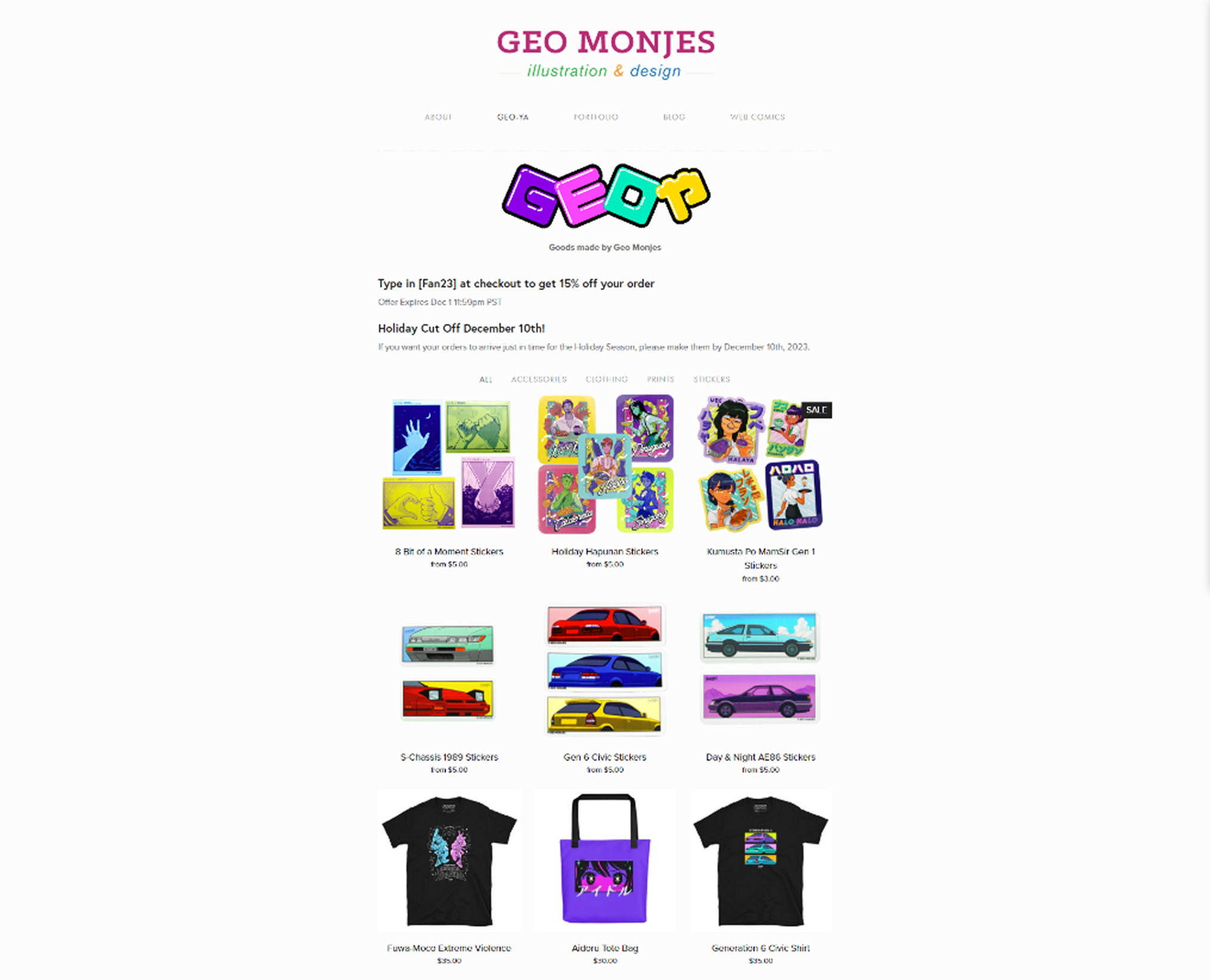
Scattered Service Presentation
Commission information was embedded inconsistently throughout product pages rather than presented as a dedicated service offering.

Platform Constraints
Squarespace limited customization flexibility, requiring design solutions that balanced ambition with feasibility.

How I solved it
I began by conducting a website audit and mapping the current user journey to identify breakdowns in navigation, storytelling, and ecommerce flow.
From there, I restructured the site around three primary experiences:
- Portfolio
- Shop
- Commissions
Homepage as a Narrative Experience
Rather than treating the homepage as a static landing page, I redesigned it as a storytelling entry point that immediately communicated the artist’s personality, visual aesthetic, and offerings.
The homepage balanced emotional branding with clear conversion opportunities directing users toward the shop and commission services.

Dedicated Commission Architecture
I separated commission services into standalone pages with clearer explanations, examples, and inquiry flows. This gave commissions greater visibility and legitimacy as a core business offering.

Ecommerce UX Improvements
To improve product discovery within Squarespace limitations, I explored:
- Store hierarchy improvements
- Product filtering approaches
- Cart interaction enhancements
- Simplified browsing flows
I also researched platform constraints extensively before designing solutions to ensure implementation feasibility.

Visual Identity Refresh
I rebuilt the visual system using typography, colors, and layouts inspired by the artist’s retro-inspired branding. The updated experience felt more immersive, expressive, and aligned with the artist’s evolving creative identity.

What it became
The redesign transformed the website from a minimal portfolio into a more intentional brand and ecommerce experience.
Users could now navigate the site more intuitively, understand commission offerings more clearly, and engage more deeply with the artist’s work and products.
The final experience better connected the artist’s personality, storytelling, and business goals into a cohesive digital platform.
What I learned
This project strengthened my ability to design strategically within platform limitations. Rather than relying on fully custom development, I had to prioritize the experiences that would create the most business value within Squarespace’s ecosystem.
It also reinforced that creator platforms should do more than display work — they should actively support growth, storytelling, and conversion.
Most importantly, the collaboration highlighted the importance of translating a creator’s personality into a digital experience that feels authentic, memorable, and commercially effective.
Let's figure out
something
great together ❖
Whether you've got a role, a project, or just want to talk design — I'm genuinely happy to hear from you. No pressure, no pitch.