B2C Mental Health Library
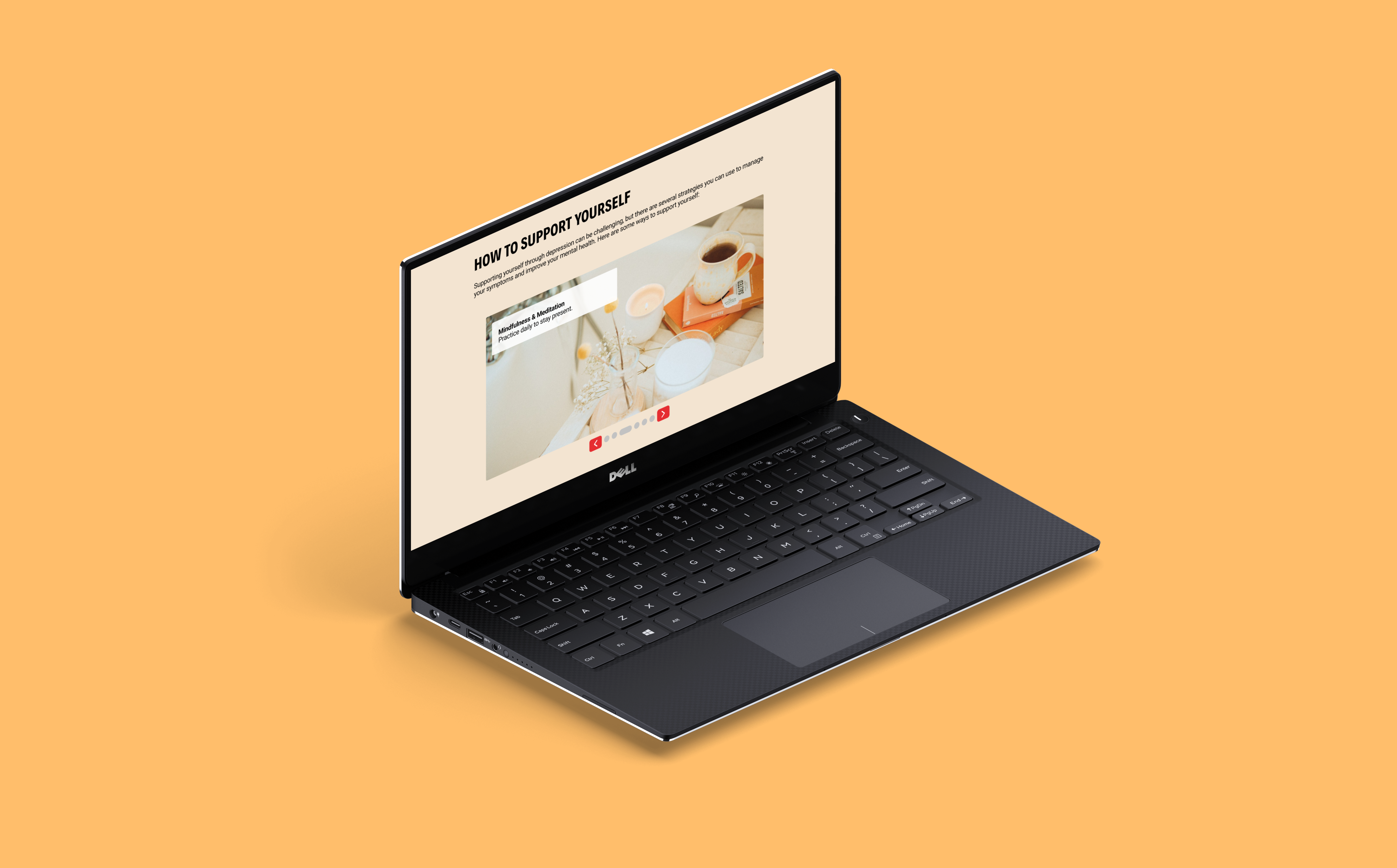
Mental health conversations are often stigmatized across Asian diaspora communities, leaving many families and individuals without culturally relevant support systems or accessible educational resources. The Asian American Federation wanted to explore what a scalable, community-centered mental health platform could look like — one that could support providers today while eventually expanding to serve broader Asian communities directly. I led the UX direction for an investor-facing vision of the platform, designing the foundational experience for a multilingual mental health ecosystem centered around education, accessibility, and stigma reduction. This project extended beyond designing webpages. It required balancing cultural sensitivity, nonprofit limitations, evolving stakeholder expectations, and long-term scalability within a highly nuanced problem space.
What we set out to do
The platform needed to:
- Centralize mental health resources into a cohesive experience
- Reduce stigma around seeking mental health support
- Support culturally relevant and multilingual content access
- Help providers better educate and guide their communities
- Create scalable UX foundations for future expansion
Key content themes included:
- Mental health stigma
- Financial stress and trauma
- Racial and religious discrimination
- Model minority pressure
- Intergenerational communication
- Guidance for discussing mental health with Asian elders
What changed
- The project operated within several layers of ambiguity and organizational limitations:
- No clearly defined primary persona at the start of the project
- Limited translated and localized content resources
- Existing information fragmented across PDFs, WeChat articles, and disconnected webpages
- Sensitive cultural considerations around discussing mental health
- Need to balance investor aspirations with realistic implementation capacity
What limited us
- The project operated within several layers of ambiguity and organizational limitations:
- No clearly defined primary persona at the start of the project
- Limited translated and localized content resources
- Existing information fragmented across PDFs, WeChat articles, and disconnected webpages
- Sensitive cultural considerations around discussing mental health
- Need to balance investor aspirations with realistic implementation capacity
What was broken
Fragmented Resource Ecosystem
Mental health resources existed across disconnected systems, PDFs, and non-web formats, making discovery and usability difficult.

Cultural Barriers to Mental Health Support
Many community members avoid mental health discussions due to stigma, shame, or generational expectations. Traditional clinical language also risked alienating users.
Unclear Audience Prioritization
Early interviews heavily emphasized end-user struggles, leading me to initially explore more community-facing solutions. Later, stakeholders clarified that the MVP needed to prioritize providers first.
Resource & Scalability Limitations
The organization did not yet have the operational capacity or translated content necessary to support a fully scaled community platform.
How I solved it
I returned to the research and reframed the experience around provider workflows while still preserving the long-term scalability vision.
Using affinity mapping and content inventory analysis, I synthesized recurring themes from provider interviews and categorized content into:
- Educational resources
- Provider support tools
- Community education
- Actionable guidance
- Stigma reduction content
From there, I designed several key product concepts:
Centralized Mental Health Hub
A scalable homepage architecture that organized educational resources, assessments, and mental health topics into a more approachable and navigable experience.
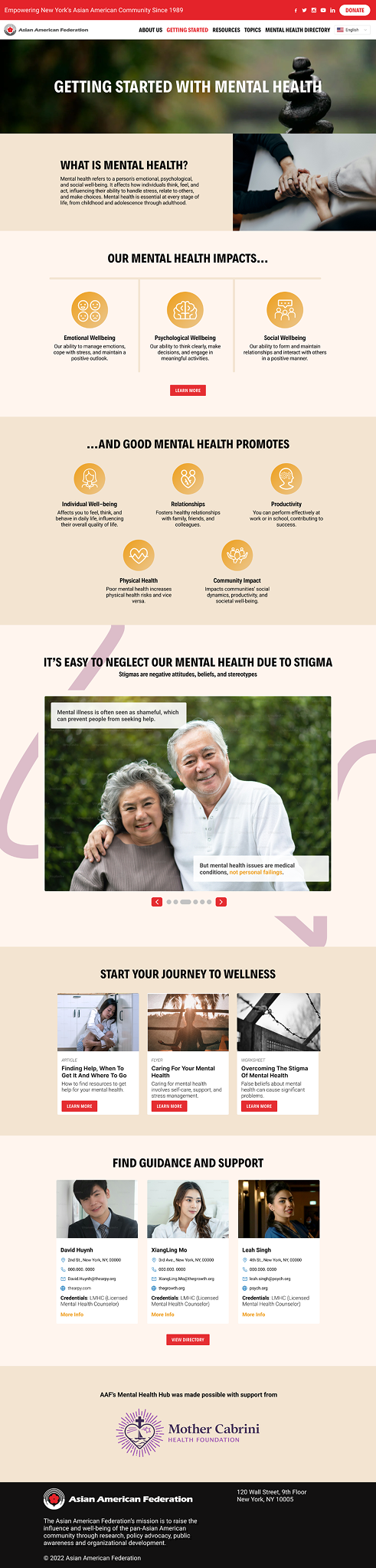
Breaking the Mental Health Stigma
A dedicated educational experience designed to normalize mental health conversations within Asian communities through culturally sensitive copy and storytelling.
Mental Health Glossary
An accessible glossary simplifying mental health terminology into easier-to-understand language for both providers and community members.

Enhanced Resource Experience
Instead of presenting static PDFs, I redesigned resource pages to include:
- Summaries
- Key takeaways
- Contextual guidance
- Downloadable translations
- Previewable content experiences
This shifted resources from passive documents into actionable educational tools.

What it became
The final direction aligned more closely with both organizational capacity and long-term product vision.
The redesigned experience demonstrated how the platform could evolve from a provider resource hub into a larger culturally centered mental health ecosystem. It also gave stakeholders a clearer framework for prioritizing scalable content and multilingual accessibility moving forward.
Most importantly, the project transformed mental health resources into experiences that felt more approachable, supportive, and culturally aware for underserved communities.
What I learned
Reflection
This project allowed me to explore how digital products can support emotionally sensitive topics within underserved communities.
One of the most valuable aspects was researching how mental health stigma uniquely impacts Asian diaspora communities and how design could help lower emotional barriers to seeking support.
It also highlighted the importance of designing beyond functionality alone. In this case, the experience needed to feel:
- safe
- approachable
- culturally aware
- emotionally supportive
The project strengthened my ability to think about UX not only as usability, but also as a tool for accessibility, trust-building, and community support.
Let's figure out
something
great together ❖
Whether you've got a role, a project, or just want to talk design — I'm genuinely happy to hear from you. No pressure, no pitch.